-
-
0 Komentar

Anak Bangsa Ciptakan Implan Mata & Tangan Robotik di KSTI, kisah inspiratif mahasiswa yang mengubah tantangan disabilitas menjadi terobosan medis nasional
In Indonesia, an inspiring story has emerged from the laboratories of the Karya Sumber Teknologi Inovasi (KSTI), where a group of university students has pioneered the development of robotic eye and hand implants. This breakthrough showcases how young innovators can transform challenges faced by people with disabilities into national medical advancements.
From Classroom to Clinic: The Genesis of the Project
The initiative began within the engineering and biomedical departments of a local university, where students were encouraged to tackle real-world problems through hands‑on research. The team, composed of mechanical, electrical, and biomedical engineering majors, identified the pressing need for affordable prosthetic solutions for individuals with visual and motor impairments. They chose to focus on two critical areas: restoring partial vision through retinal implants and enhancing hand function through robotic prosthetics.
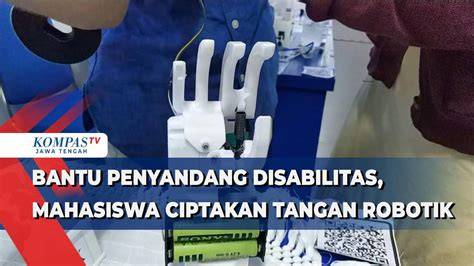
Using open‑source designs and affordable materials, the students constructed prototypes that could be implanted with minimal surgical intervention. The eye implant, for instance, was engineered to interface directly with the optic nerve, translating light signals into electrical impulses that the brain could interpret as visual input. The hand prosthetic incorporated a lightweight frame and micro‑actuators, allowing users to perform delicate tasks with a range of motion that mimics natural fingers.
Throughout the development process, the team collaborated with clinical researchers and local hospitals to ensure that the prototypes met safety standards and could be integrated into existing medical protocols. Their iterative approach—design, test, refine—enabled rapid progress and the eventual creation of functional prototypes that could be evaluated in controlled settings.
Technical Highlights and Innovation Pathways
One of the key innovations in the eye implant design is its use of a flexible, biocompatible substrate that reduces the risk of rejection and inflammation. The implant’s circuitry is powered by a small, rechargeable battery, eliminating the need for external power sources. Similarly, the hand prosthetic’s control system leverages electromyography (EMG) sensors placed on the residual limb, translating muscle signals into precise movements. This non‑invasive control method enhances user comfort and reduces training time.
Both devices also incorporate advanced signal processing algorithms to filter noise and improve the fidelity of sensory input. In the case of the retinal implant, the algorithms convert varying light intensities into a graded electrical stimulus, enabling users to discern shapes and movement. For the robotic hand, the algorithms adjust grip strength in real time, preventing accidental dropping or crushing of objects.
Beyond the technical aspects, the students emphasized the importance of cost reduction. By sourcing materials locally and utilizing additive manufacturing techniques, they were able to keep the production costs significantly lower than many imported prosthetic options. This focus on affordability is crucial for scaling the technology across Indonesia’s diverse population, where many patients face financial barriers to advanced medical devices.
Why This Development Matters for Indonesia
The creation of these implants carries profound implications for Indonesia’s healthcare landscape. First, it demonstrates that high‑technology medical devices can be developed domestically, reducing dependence on foreign imports and fostering self‑reliance in critical health sectors. Second, the affordability factor means that a larger segment of the population could access life‑improving prosthetics, potentially reducing the socioeconomic burden associated with disability.
Moreover, the project serves as a model for interdisciplinary collaboration. Students from engineering, computer science, and biomedical fields worked side by side, illustrating how diverse expertise can converge to solve complex health challenges. This collaborative spirit could inspire similar initiatives across other universities, accelerating the pace of medical innovation nationwide.
From a societal perspective, the implants also carry symbolic significance. By providing new avenues for independence and dignity, they help shift perceptions of disability from a purely medical issue to a multifaceted social challenge. The success of these prototypes could encourage policymakers to invest more heavily in research and development programs that empower local talent to address national health needs.
Future Directions and Potential Impact
Looking ahead, the team plans to refine the prototypes further, focusing on enhancing durability and user interface. Clinical trials are anticipated to validate long‑term safety and efficacy, with the goal of obtaining regulatory approval. If successful, the implants could be integrated into national health insurance schemes, ensuring broader accessibility.
Additionally, the students are exploring partnerships with local manufacturing firms to establish a production line that could supply not only Indonesia but also neighboring countries. Such regional collaboration would position Indonesia as a hub for affordable medical technology in Southeast Asia.
Beyond the immediate medical benefits, the project’s ripple effects could extend into education and workforce development. By showcasing the tangible outcomes of academic research, universities may attract more students to STEM fields, thereby strengthening the country’s talent pool for future innovations.
Closing Reflections
The journey of these students—from conceptualizing a robotic eye and hand to bringing functional prototypes to life—illustrates the transformative power of ingenuity, collaboration, and perseverance. Their work underscores the potential for local talent to address global challenges, turning a personal mission into a national milestone. As Indonesia continues to invest in science and technology, stories like this serve as a reminder that the next breakthrough may very well come from the next generation of passionate, determined innovators.
Disclaimer: This article was automatically rewritten by AI based on source: Anak Bangsa Ciptakan Implan Mata & Tangan Robotik di KSTI, kisah inspiratif mahasiswa yang mengubah tantangan disabilitas menjadi terobosan medis nasional, without altering the facts of the original article.
